Systems Built for High-Capacity Industrial Operations
Industrial Electrical Services in Atlanta for facilities requiring complex power systems, equipment wiring, and strict regulatory compliance
Industrial operations depend on electrical systems that deliver high-capacity power reliably without the downtime that halts production and creates costly delays. Major Electrical Mechanics provides industrial electrical services for facilities requiring equipment wiring, system upgrades, and ongoing maintenance that keeps operations running smoothly. The work addresses manufacturing plants, distribution centers, and industrial facilities where three-phase power, motor control circuits, and specialized equipment demand expertise beyond standard commercial electrical service.
Industrial electrical work involves installing and maintaining systems that operate continuously under heavy loads, with protection devices calibrated to distinguish between normal motor startup currents and actual fault conditions. Equipment wiring follows manufacturer specifications for control circuits, incorporates proper overload protection sized for the motor's service factor, and uses cable rated for the temperatures and mechanical stresses present in industrial environments. Every installation meets NEC requirements and industry-specific regulations governing workplace electrical safety.
Schedule an on-site assessment to evaluate your facility's electrical requirements and identify necessary upgrades or repairs.
Why Industrial Systems Require Specialized Approach
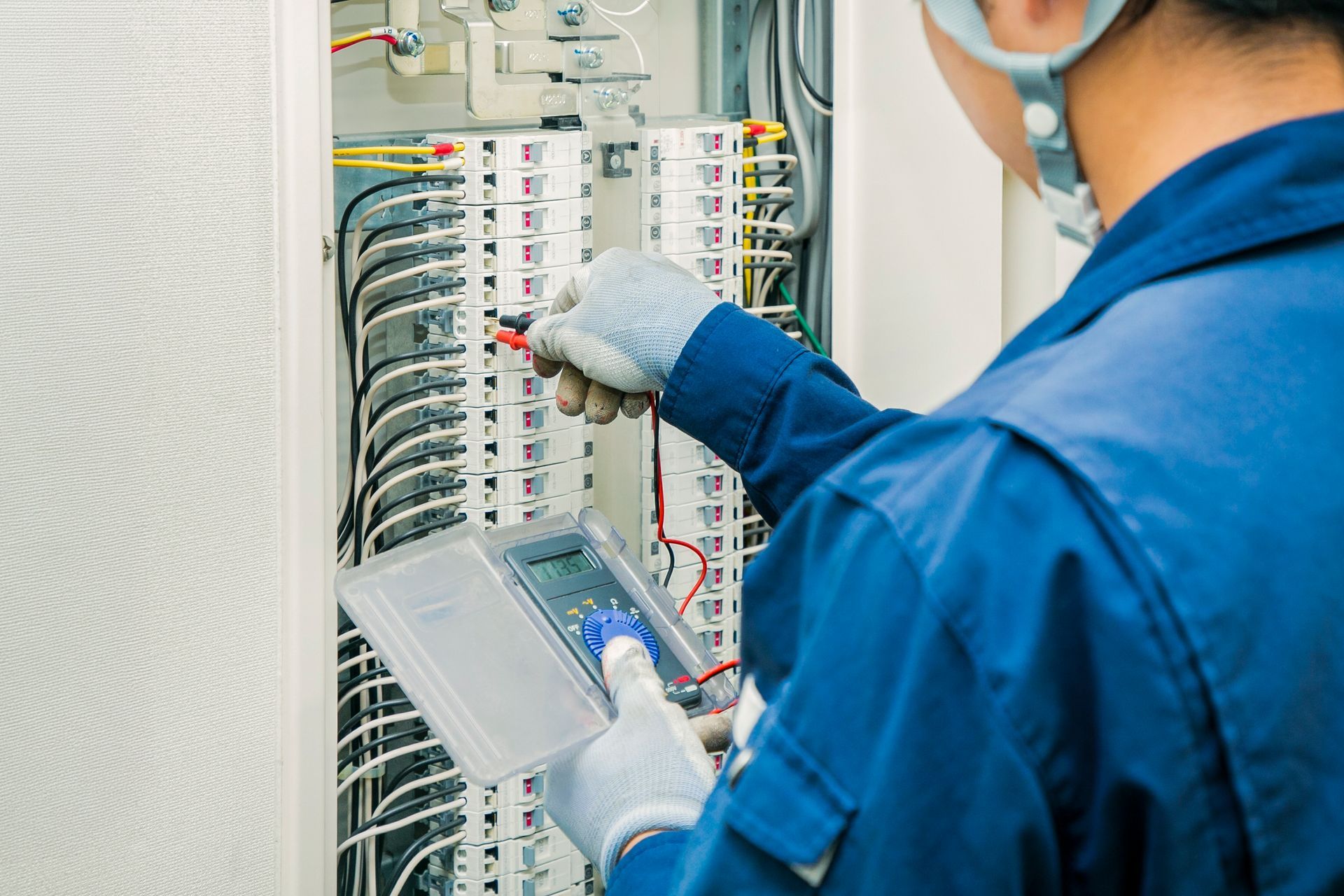
Industrial electrical systems operate at voltages and currents that require different protective strategies than residential or light commercial work, with three-phase motors drawing hundreds of amps during startup and creating harmonic currents that affect power quality throughout the facility. Proper installation includes coordinated overcurrent protection that allows momentary inrush without nuisance tripping while still clearing faults quickly enough to prevent equipment damage. Conductor sizing accounts for voltage drop across long runs between service equipment and remote machinery, ensuring motors receive adequate voltage to develop full torque without overheating.
When systems function correctly, equipment starts reliably without dimming lights elsewhere in the facility, motors run cool even during extended operation, and protective devices trip only during actual fault conditions rather than during normal high-load periods. Control circuits respond precisely to input signals, automated processes maintain consistent timing, and power monitoring systems provide real-time data showing load distribution and power factor across the facility.
Services include troubleshooting existing installations to identify failing components before they cause unplanned shutdowns, upgrading systems to accommodate new equipment or increased production capacity, and implementing preventive maintenance schedules that catch developing problems during planned downtime rather than emergency situations. The work does not include process control programming or PLC configuration unless specifically contracted, focusing instead on the power distribution and equipment wiring that supports industrial automation.
Answers to Frequent Service Questions
Industrial facility managers need clarity on safety compliance, system reliability, and how electrical service minimizes production interruptions.
What compliance standards apply to industrial electrical installations beyond basic NEC requirements?
Industrial facilities must meet OSHA regulations for workplace electrical safety, including lockout/tagout procedures, arc flash labeling with incident energy calculations, and documented electrical safety programs that govern work on or near energized equipment.
How does ongoing maintenance reduce unexpected downtime in industrial operations?
Regular thermal scanning detects hot connections developing in motor control centers, periodic testing verifies that protective relays trip at calibrated settings, and infrared analysis identifies bearing problems in motors before they progress to catastrophic failure requiring emergency replacement.
What factors determine when an industrial facility needs a system upgrade?
Increased production demands that exceed existing electrical capacity, frequent breaker trips indicating marginal design, equipment additions requiring fault current ratings beyond what current panels can safely interrupt, or obsolete components no longer supported with replacement parts all signal the need for system upgrades.
How are industrial electrical services scheduled to minimize business disruption?
Work occurs during planned maintenance windows, with critical installations staged so portions of the facility remain operational, and emergency support available for troubleshooting that cannot wait for scheduled service intervals.
Why does equipment wiring in Atlanta industrial facilities require specific environmental considerations?
High heat and humidity in non-climate-controlled spaces accelerate insulation degradation and corrosion of terminations, requiring conductor insulation rated for 90°C wet locations and periodic re-torquing of connections that experience thermal cycling between loaded and unloaded conditions.
Major Electrical Mechanics understands that industrial operations cannot tolerate extended electrical outages, and structures service to maintain production schedules. Arrange a facility review to develop a maintenance plan suited to your operational requirements and equipment criticality.