Wiring Systems Built for Code and Long-Term Safety
Electrical Wiring in Atlanta for new construction, full rewiring, and system installations that meet NEC code requirements
Major Electrical Mechanics handles electrical wiring for residential and commercial properties throughout the Atlanta area, including new house wiring, complete rewiring projects, and full system installations. The work addresses properties where outdated wiring creates safety risks, new construction requiring scalable electrical infrastructure, or renovations that demand code-compliant updates. Every installation includes proper grounding and bonding of dwelling units, which directly affects system performance and reduces shock hazards.
The service replaces unsafe wiring systems with organized, code-compliant installations designed to pass inspection with appropriate permits secured before work begins. Proper grounding and bonding tie the electrical system to earth and equalize voltage across all metallic components, preventing dangerous potential differences that can occur during faults or lightning strikes. Clean conductor routing and labeled panels make future troubleshooting straightforward and support long-term system reliability.
Schedule a property evaluation to assess current wiring condition and determine code compliance requirements.
What Proper Wiring Installation Requires
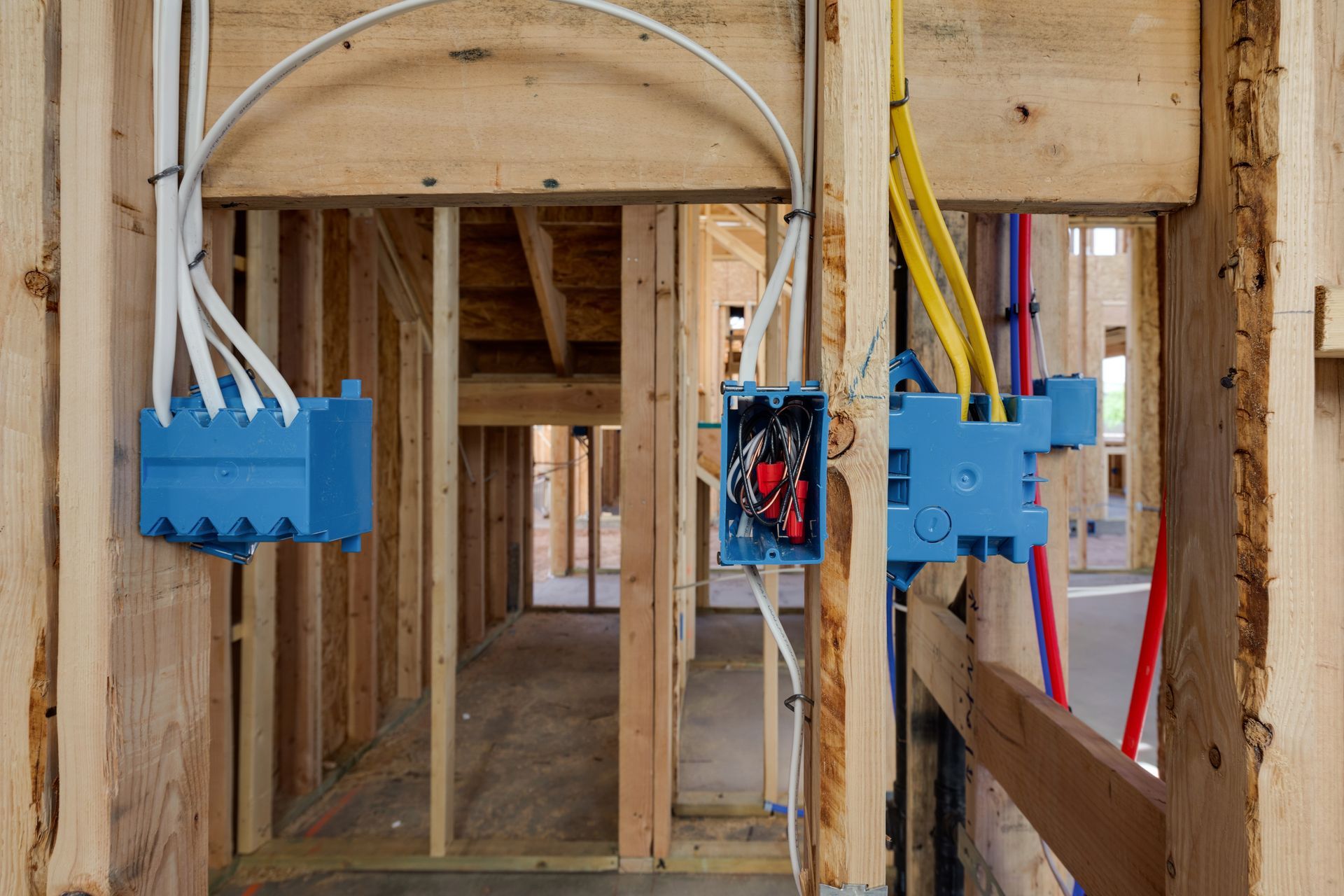
The process begins with planning conductor paths, calculating load requirements for each circuit, and determining panel capacity based on current and future needs. All wire sizing follows NEC ampacity tables to prevent overheating, and connections are torqued to manufacturer specifications to avoid loose terminals that generate heat over time. Grounding electrode conductors bond the service panel to ground rods or building steel, while equipment grounding conductors run with every circuit to provide a fault-current return path.
Once the system is energized, you notice breakers that don't trip randomly, outlets that hold plugs firmly without arcing, and panels that remain cool to the touch even under load. Lights no longer dim when appliances start, and sensitive electronics operate without interference from voltage fluctuations. The wiring remains concealed but accessible at junction boxes, with proper support preventing sagging that can stress connections over decades.
The installation includes labeling every circuit at the panel, providing as-built documentation showing wire routes, and ensuring adequate capacity for adding circuits later without a service upgrade. The work does not include low-voltage systems like data cabling or security wiring unless specifically contracted, and older wiring is removed rather than abandoned in walls to prevent confusion during future work.
Questions Before Starting Your Wiring Project
Wiring projects raise concerns about process, timing, and what the work actually involves. These answers clarify how installation proceeds and what changes after completion.
What determines whether a property needs full rewiring or partial updates?
Properties with aluminum wiring, knob-and-tube systems, or cloth-insulated conductors typically require complete replacement, while homes with outdated panel capacity but sound branch wiring may only need service upgrades and selective circuit additions.
How does grounding and bonding improve electrical safety in dwelling units?
Grounding provides a low-resistance path for fault current to trip breakers quickly, while bonding connects all metal components to the same potential so touching two surfaces simultaneously cannot create a shock path even during a fault condition.
What happens during the inspection process for new wiring installations?
The electrical inspector verifies wire sizing matches breaker ratings, checks that all connections are properly torqued and supported, confirms grounding electrode system installation, and ensures the work matches the permitted scope before authorizing the utility to energize the service.
When should rewiring occur during a renovation timeline?
Wiring installation happens after framing and before insulation or drywall, allowing inspectors to verify conductor routing and connection quality while everything remains visible and accessible for corrections.
How do Atlanta's humidity levels affect long-term wiring performance?
Conductors themselves resist moisture well, but high humidity accelerates corrosion at aluminum-to-copper transitions and poorly sealed junction boxes, making proper anti-oxidant compound application and weatherproof enclosures critical in unconditioned spaces like attics and crawlspaces.
Major Electrical Mechanics organizes installations to minimize disruption and maintain code compliance throughout every phase. Request a detailed estimate based on your property's current electrical configuration and planned updates.