Reliable Solutions for Business Electrical Needs
Commercial Electrical Services in Atlanta for offices, retail spaces, and facilities requiring installations, upgrades, and compliance with commercial electrical codes
Commercial properties face electrical demands that change as tenants turnover, business operations expand, or building systems age beyond their design life. Businesses throughout the Atlanta area rely on Major Electrical Mechanics for commercial electrical services that support tenant build-outs, system upgrades, and repairs that keep operations running without extended interruptions. The work addresses everything from adding circuits for new equipment to rewiring spaces during remodels, with all installations meeting commercial electrical codes and safety standards that govern workplace electrical systems.
Commercial service involves coordinating work around business hours to minimize disruption, planning installations that accommodate future changes without major rework, and ensuring that all electrical systems support the specific demands of office equipment, retail lighting, or specialized business operations. Projects include proper grounding for sensitive computer networks, adequate circuit capacity for HVAC systems and commercial kitchen equipment, and emergency lighting that meets egress requirements.
Request an evaluation to identify electrical improvements needed for your commercial space or upcoming tenant build-out.
What Commercial Installations Actually Accomplish
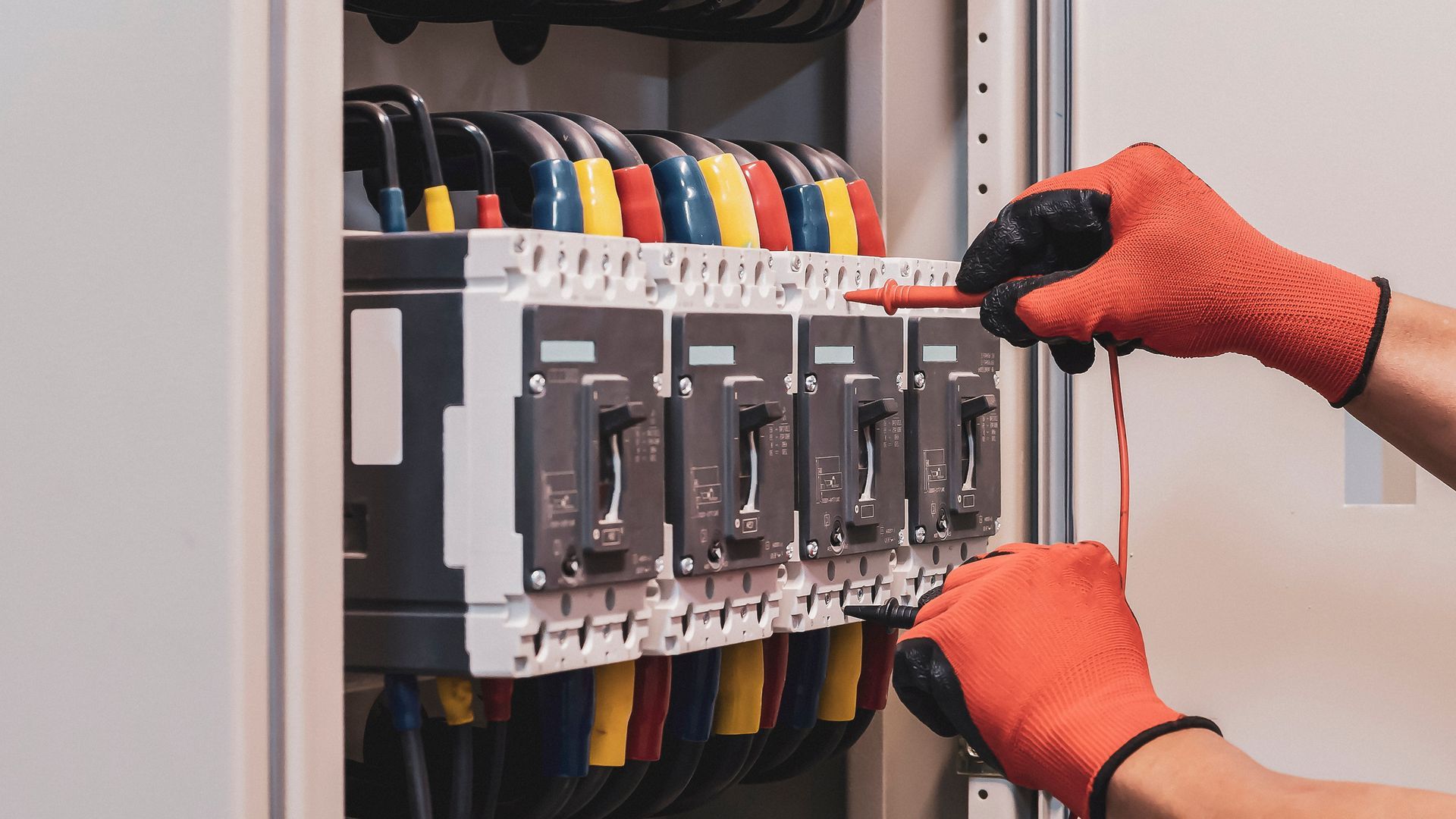
Commercial electrical work delivers infrastructure that supports changing business needs, with panel capacity allowing circuit additions without service upgrades and wire routing designed for accessibility when spaces get reconfigured. Installations follow commercial code requirements for outlet spacing, GFCI protection in break rooms and restrooms, and dedicated circuits for equipment that cannot share loads with general-purpose receptacles. Proper neutral sizing prevents voltage imbalances in spaces with many electronic loads, and harmonic currents from computers and LED lighting remain within levels that don't overheat conductors.
When commercial systems function properly, businesses experience reliable power delivery without flickering during high-load periods, breakers that remain stable even when multiple pieces of equipment operate simultaneously, and electrical distribution that supports adding workstations or retail displays without tripping circuits. Emergency lighting activates instantly during power failures and provides adequate illumination along egress paths, while exit signs remain continuously lit through battery backup systems.
Services include upgrading outdated electrical systems to support modern business equipment, troubleshooting intermittent problems that don't leave obvious evidence, and implementing improvements that reduce energy costs through more efficient lighting and better load management. The work focuses on electrical infrastructure rather than low-voltage systems like data cabling, fire alarms, or access control unless specifically included in the project scope.
Questions Before Starting Your Project
Business owners and property managers need practical information about commercial electrical work, code requirements, and scheduling that respects operational demands.
What distinguishes commercial electrical code requirements from residential standards?
Commercial installations require more stringent grounding and bonding, GFCI protection in all areas accessible to the public, specific outlet spacing for continuous wall sections, and emergency lighting with battery backup meeting egress illumination requirements calculated for occupancy load.
How does electrical service scheduling minimize disruption to business operations?
Work occurs during off-hours when possible, critical circuits remain energized while non-essential areas are de-energized for modifications, and projects are staged so portions of the space remain functional throughout the installation rather than shutting down entire floors or buildings.
When does a tenant build-out require upgrading the building's main electrical service?
Build-outs adding significant HVAC capacity, commercial kitchen equipment, server rooms, or manufacturing equipment may exceed the building's available capacity, requiring service upgrades before tenant improvements can proceed.
What electrical factors affect energy costs in commercial spaces?
Inefficient lighting consuming more watts than LED alternatives, oversized motors running partially loaded and wasting energy, and poor power factor from inductive loads all increase utility bills beyond what the actual work performed requires.
How do Atlanta's commercial electrical requirements address outdoor lighting and signage?
Outdoor installations require weatherproof enclosures and UV-resistant wiring, photocell controls that adjust for seasonal daylight variation, and proper grounding for pole-mounted fixtures exposed to lightning strikes during Georgia's frequent thunderstorm season.
Major Electrical Mechanics provides clear project timelines and works efficiently to limit operational disruption during commercial electrical projects. Contact us to discuss your facility's specific electrical needs and develop a service plan that supports your business continuity requirements.